
Exchange Betting: Capturing Value Against Bookmakers
Seven years into my racing career, I realised I’d been playing the wrong game. Every bet I placed with a traditional bookmaker was a transaction where the house had a structural edge — margins built into every price, restrictions waiting for anyone who won too often. Then I placed my first exchange bet, backing a horse at 6.4 (roughly 27/5 in fractional terms) when the best bookmaker price was 5/1. Same horse, same race, better price, no threat of account restriction. The exchange didn’t care whether I won or lost because I wasn’t betting against them. I was betting against another punter.
That distinction — betting against other people rather than against a bookmaker — is the foundation of everything that makes exchanges different. A betting exchange is a marketplace. You request a price, someone else accepts it (or doesn’t), and the exchange takes a commission on your net winnings. William Hill captures 37.83% of all paid search clicks in UK racing, and bet365 takes another 16.2%, which tells you where most punters’ money flows. But the punters who consistently extract value over years gravitate toward exchanges for specific and rational reasons.
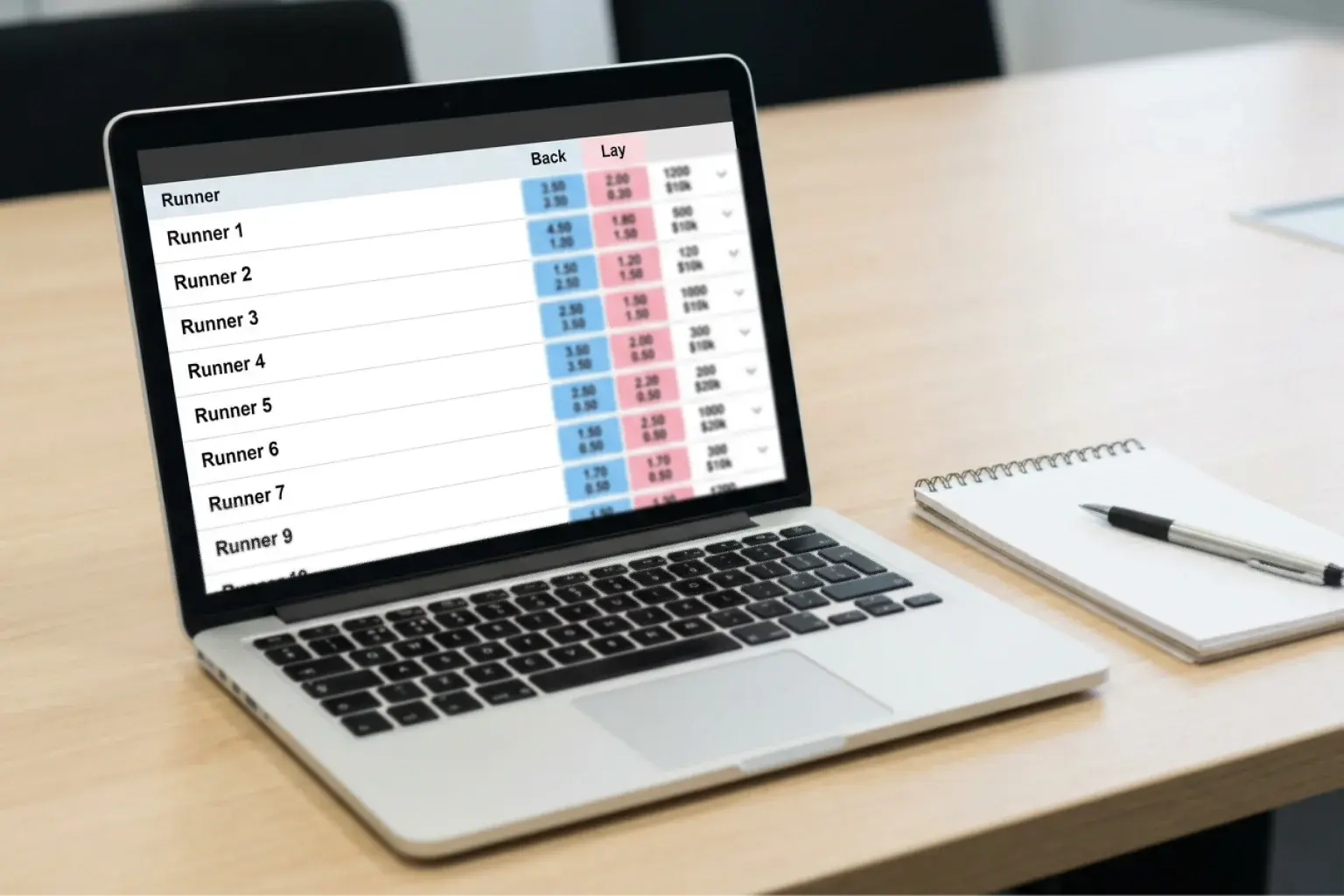
How Back and Lay Betting Works
On a traditional bookmaker, you can only back a horse — bet that it will win. On an exchange, you can also lay a horse — bet that it will lose. Laying means you’re taking the role of the bookmaker for that specific bet.
When you back a horse at 5.0 (4/1) for 10 pounds on an exchange, you’re saying “I believe this horse will win and I want someone to take the other side.” Another user who believes the horse won’t win lays that bet, accepting the risk of paying you 40 pounds if the horse wins in exchange for keeping your 10-pound stake if it loses. Your risk is 10 pounds, their risk is 40 pounds — exactly the same as when a bookmaker takes your bet, except now the other side is a person, not a corporation.
The lay side opens strategic possibilities that don’t exist with traditional bookmakers. If you believe a particular favourite is overrated, you don’t need to find a horse to beat it — you simply lay the favourite. If it finishes second, third, or anywhere but first, you profit. This is a fundamentally different betting proposition, and it suits certain race types exceptionally well. Strong favourites in big-field handicaps, for instance, fail to win more often than their price suggests — a statistical reality that laying exploits directly.
Why Exchange Prices Are Usually Better
Bookmaker margins on horse racing typically run between 10% and 20% on a race. That margin is the mathematical advantage the bookmaker builds into every set of prices. On an exchange, there is no built-in margin because the prices are set by users, not by a trading desk. The exchange takes a commission on winning bets instead — typically 2-5% of net profits.
The practical result: exchange prices are nearly always better than bookmaker prices. On a horse priced at 5/1 with a bookmaker, the equivalent exchange price frequently sits at 5.5 or 6.0 (9/2 or 5/1 plus). Over hundreds of bets, that price difference compounds into a significant return advantage. I tracked my own results across a full season, placing the same selections at both bookmaker and exchange prices, and the exchange produced a 7% higher return on investment over 400 bets. That’s real money — not theoretical, not modelled, but actually banked.
The exception is liquidity. Exchange prices are only available if someone is willing to take the other side of your bet. On major UK races — any meeting from a Class 3 upward on a Saturday, or any festival race — liquidity is deep and you’ll get matched instantly at the displayed price. On a Monday afternoon at a minor all-weather track, the exchange might show a thin market with limited money available, wide spreads between back and lay prices, and a real risk of not getting matched at all. Know when to use the exchange and when to default to a bookmaker, and you’ll capture the price advantage without the frustration of unmatched bets.
Trading Positions Before the Race
Here’s where exchanges become genuinely powerful for someone willing to treat racing as a market rather than a gamble. Because you can both back and lay the same horse, you can trade positions as prices move.
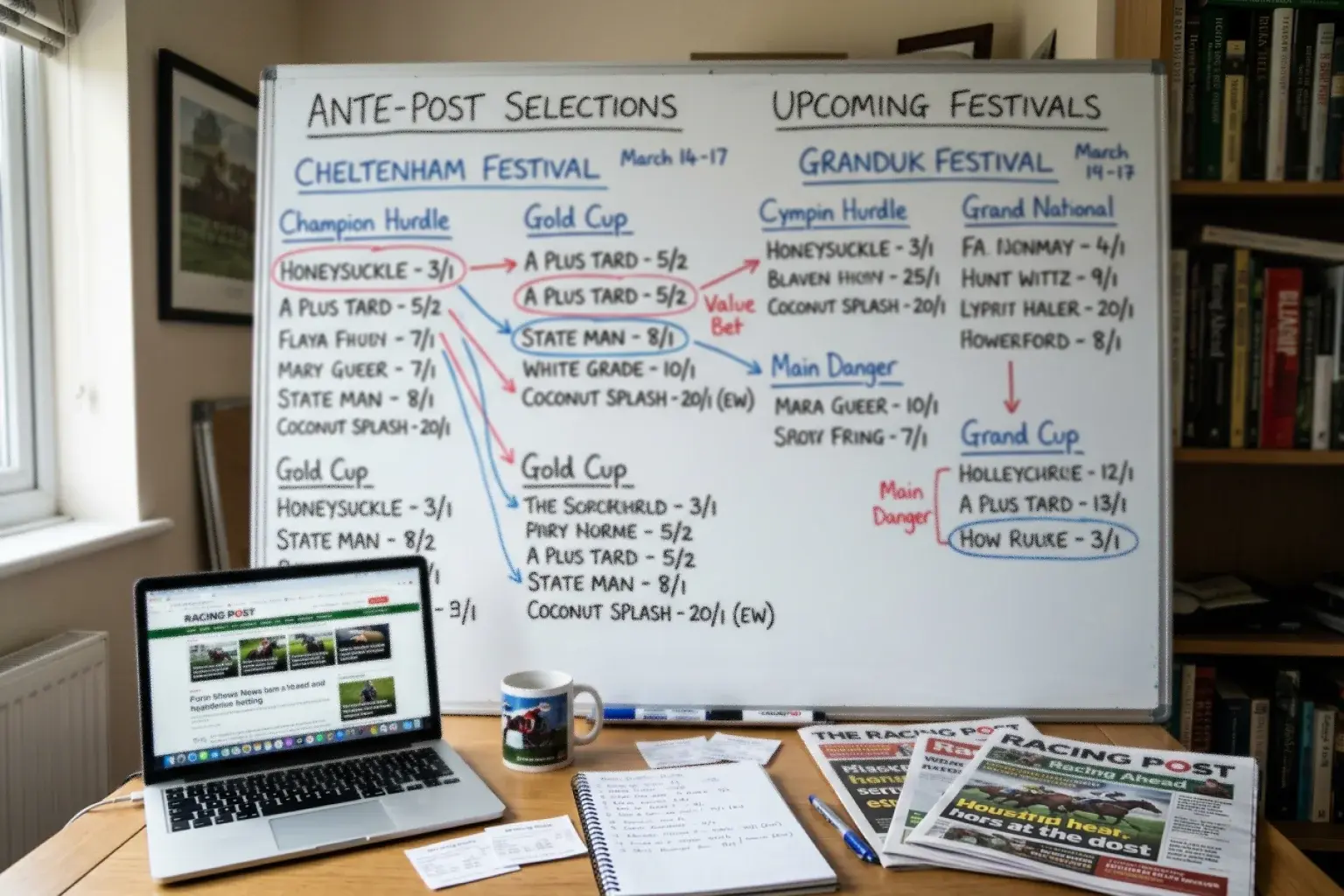
A simple example. You back a horse at 8.0 (7/1) on Monday when the ante-post market first opens for a Saturday race. By Thursday morning, the horse is backed in to 5.0 (4/1) following a favourable gallops report. You lay the horse at 5.0 for the same stake. Regardless of whether the horse wins or loses the race, you’ve locked in a profit from the price movement. If it wins, your back bet pays at 8.0 and your lay bet costs you at 5.0 — net profit. If it loses, your back bet loses but your lay bet wins the full stake. The maths guarantees a positive outcome either way.
This is not gambling in the traditional sense. It’s market trading, and it requires a completely different skill set: the ability to predict price movements rather than race results. Some of the most profitable exchange users I know couldn’t tell you the name of a single horse’s sire, but they understand market dynamics, public sentiment, and information flow better than anyone at the racetrack.
Trading is not without risk. If you back at 8.0 and the price drifts to 12.0 instead of shortening, you’re now in a worse position — you either take a loss by laying at the higher price or hold and hope the original assessment was right. The ante-post element adds further risk since non-runners in ante-post markets mean lost stakes with no recourse. Understanding ante-post market mechanics is a prerequisite before attempting any serious exchange trading strategy.
Exchange Betting for the Account-Restricted Punter
Account restrictions are the silent crisis of UK horse racing betting. Win consistently with a traditional bookmaker and your stakes get slashed — sometimes to pennies. Over 120 licensed operators in the UK market, and yet profitable punters report being restricted across the majority of them. The exchange is the escape valve.
Exchanges don’t restrict winning customers because winning customers are not a cost to the platform. The exchange makes its money from commission on all net winnings regardless of which side of the bet wins. A sharp punter who consistently backs winners at better-than-SP prices is actually good for the exchange because they generate commission and attract volume from the other side of the market. The incentive structure is aligned: win as much as you like, the exchange is happy to take its percentage.
For punters who’ve been restricted elsewhere, the exchange represents the only sustainable long-term platform for serious horse racing betting. The prices are better, the market is open, and the only cost is the commission structure — which, at 2-5% of net profits, is a fraction of the 10-20% margin bookmakers embed in their odds.