
Stall Position Value: Exploiting Track Bias Statistics
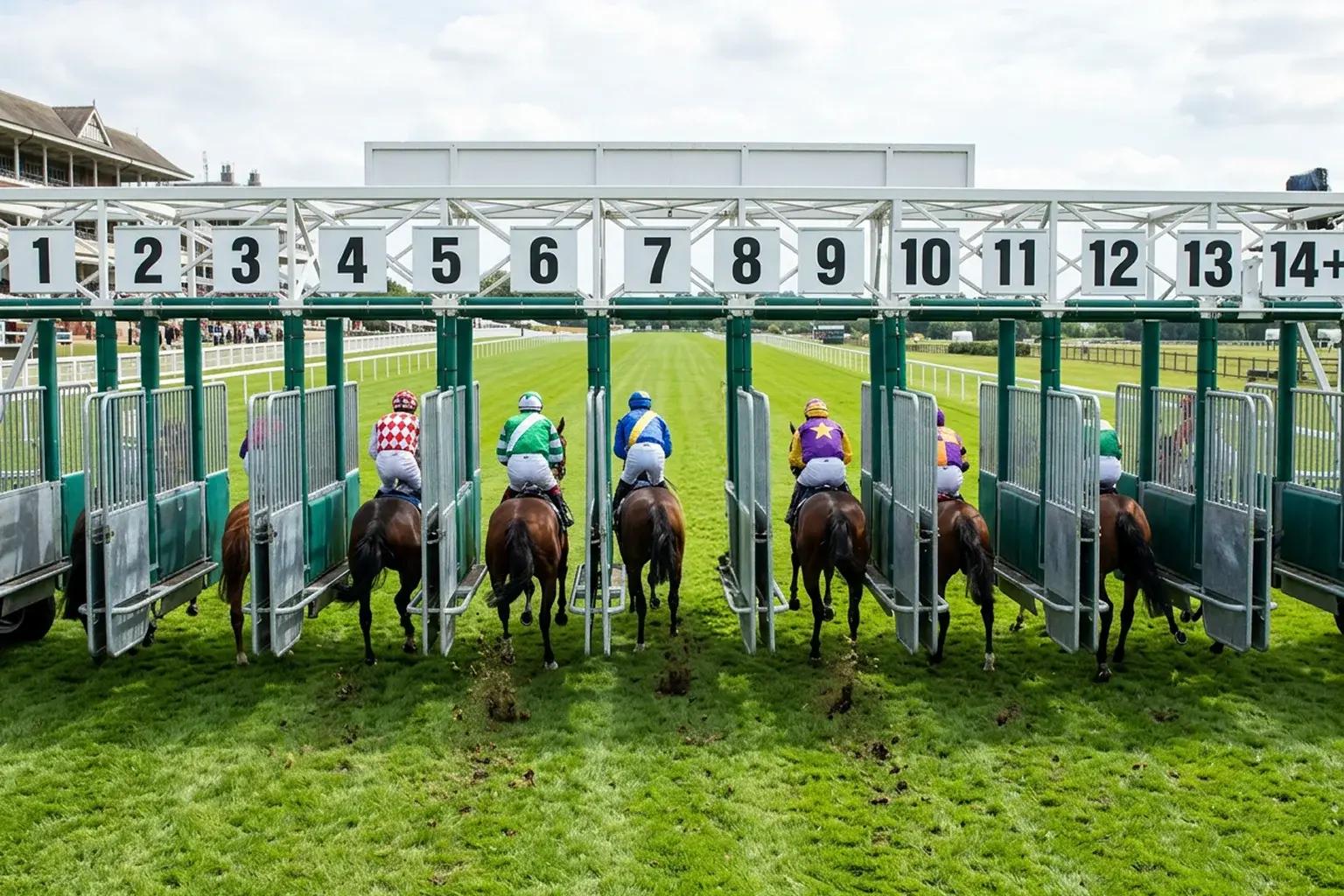
I backed a horse at Chester over five furlongs that had the best form in the race by a clear margin. It was drawn in stall 12 of 12. It finished seventh. The winner? Drawn in stall 1, with form two pounds inferior on ratings. Chester over five furlongs with a high draw is close to a death sentence, and I’d ignored it because the form looked overwhelming. It wasn’t. The draw was the form, and I’d bet against the track geometry.
Draw bias — the statistical advantage or disadvantage conferred by starting stall position — is one of flat racing’s most underused betting tools. With over 120 licensed UK operators competing for your attention with enhanced odds and free bet promotions, none of them mention the draw in their marketing materials. They want you thinking about the horse’s name and the jockey’s colours, not about the mathematical relationship between stall position and finishing position at specific courses and distances.
That silence is your edge. Understanding draw bias doesn’t require sophisticated modelling or proprietary data. It requires knowing which courses produce consistent biases, which distances within those courses amplify the effect, and how ground conditions alter the pattern on any given day.
Why Draw Bias Exists and Where It’s Strongest
Draw bias is a product of course geometry, ground conditions, and racing tactics. On a straight course, the bias comes from uneven ground across the width of the track — one side might be fresher, better maintained, or simply firmer than the other. On a turning course, the bias comes from the racing line: horses drawn low on a tight left-handed bend have a shorter distance to travel than those drawn high.
Chester is the extreme case. The tight, left-handed circuit means low draws enjoy a massive advantage over sprint distances because they can sit on the inside rail and save several lengths through the bends. Over five and six furlongs, stalls 1-4 have a win rate roughly double that of stalls 8 and above. No amount of superior form overcomes that geometry consistently.
Beverley over five furlongs on the round course favours high draws. The track slopes away from the stands’ side, and runners drawn high can take the faster ground without being forced wide. Thirsk over six furlongs on soft ground reverses its normal pattern — when the ground is testing, the far side (high draws) tends to be less churned and therefore faster. Musselburgh over five furlongs favours low draws on the straight course when the rail is on the stands’ side, but the bias flips when the rail position changes.
The critical point is that draw bias is not fixed. It shifts with going, rail position, and field size. A course that strongly favours low draws on good ground might show no bias at all on soft, because the ground conditions neutralise the geometric advantage. Treating draw bias as a static lookup table is almost as dangerous as ignoring it entirely.
Quantifying the Bias: What the Numbers Tell You
Betting and Gaming Council CEO Gráinne Hurst has spoken forcefully about the threats facing the regulated market, describing unlicensed operators as entities that “don’t pay tax, don’t care about safer gambling, and do not contribute a penny to the levy.” That regulatory focus underscores a broader point about the UK market — it’s the most data-rich racing environment in the world. Draw data for every UK flat race is publicly available and remarkably detailed, yet most punters never look at it.
I analyse draw statistics in terms of two metrics: win percentage by draw third (low, middle, high) and impact value (actual winners divided by expected winners based on field size). An impact value above 1.0 means that draw group is producing more winners than random chance would predict. Below 1.0 means fewer.
At Chester over five furlongs, the low-draw third (stalls 1-4 in a 12-runner field) produces an impact value of approximately 1.8 — nearly twice as many winners as expected. The high-draw third produces roughly 0.4. Those numbers translate directly to betting adjustments: a horse drawn low at Chester should be assessed as roughly two lengths better than its form suggests relative to high-drawn rivals, purely from the draw advantage. Two lengths is the difference between a 6/1 shot and a 4/1 shot in probabilistic terms.
At courses where the draw has minimal impact — Ascot on the round course, Newmarket over a mile, Doncaster over middle distances — the impact values cluster around 1.0 across all thirds. Adjusting for the draw at these courses would be adding noise to your analysis rather than signal. Knowing where the draw matters and where it doesn’t is as important as knowing the direction of the bias where it does exist.
Going, Rail Position, and the Dynamic Nature of Bias
Average betting turnover per race fell 8% in the 2024/25 season and 19% compared with 2021/22. As the market tightens, the edges that remain need to be sharper — and understanding how draw bias shifts with conditions is one of the sharpest available.
Going changes draw bias by altering where the best ground lies across the width of the track. At York over six furlongs, the standard pattern slightly favours middle-to-high draws. But after a dry spell when the ground is firm, the stands’ side (low draws) rides faster because it gets less traffic through the season. After persistent rain, the ground away from the rail (high draws) can be less saturated and therefore faster. The bias is real but conditional, and treating it as unconditional leads to bad bets.
Rail position — the placement of the running rail that defines the inside of the track — is announced before each meeting and can shift the effective draw by several stalls. At Newmarket on the Rowley Mile, moving the rail out by five yards changes which draws are closest to the shortest racing line. At Ascot on the straight course, the rail position announcement on the morning of racing is effectively a draw bias announcement in disguise. I check rail positions on every straight-course meeting before finalising any bet.
Field size also moderates bias strength. A five-runner sprint at Chester barely has a draw bias because all runners are relatively close together. A 20-runner sprint at Ayr amplifies the bias because the distance between the lowest and highest draw is physically greater, and the tactical options for overcoming a bad draw are more limited in a large field. I only apply significant draw adjustments in fields of 12 or more runners, where the positional disadvantage is difficult to mitigate through riding.
Putting Draw Bias Into Your Betting Process
The mistake most punters make with draw analysis is treating it as a standalone factor rather than integrating it into a broader assessment. A horse with the best form, the best jockey, proven going preference, and a terrible draw should not automatically be abandoned. It should be reassessed: does the draw disadvantage outweigh the form advantage? Sometimes yes, sometimes no.
My process works in three steps. First, I identify whether the course and distance produces a meaningful draw bias by checking impact values. If the impact values across draw thirds are all between 0.8 and 1.2, I ignore the draw for that race. Second, for races with genuine bias, I adjust my tissue price for each runner based on draw position — adding roughly one length of adjustment per unit of impact value deviation from 1.0. Third, I compare my adjusted prices to the market to identify where the market has underweighted the draw factor.
The third step is where the money is. The market is generally aware of draw bias at extreme courses like Chester, so the prices there already reflect some draw adjustment. Where the market consistently underweights the draw is at courses with moderate, conditional biases — Haydock, Beverley, Catterick, Musselburgh — where the bias is real but not dramatic enough to enter casual conversation. At these venues, a two-to-three-length draw adjustment can shift a horse from fair value at 8/1 to genuine value at 8/1, or from apparent value to poor value, depending on which stall it’s drawn in.
One last practical note: early-morning prices often reflect draw bias less accurately than prices closer to the off. As the market matures through the morning, sharper money adjusts for the draw, and prices move accordingly. If you’ve done your draw homework and identified a bias the early market hasn’t priced in, getting your bet on early locks in the value before the adjustment arrives.