
Common Betting Errors: Protecting Value and Minimizing Risk
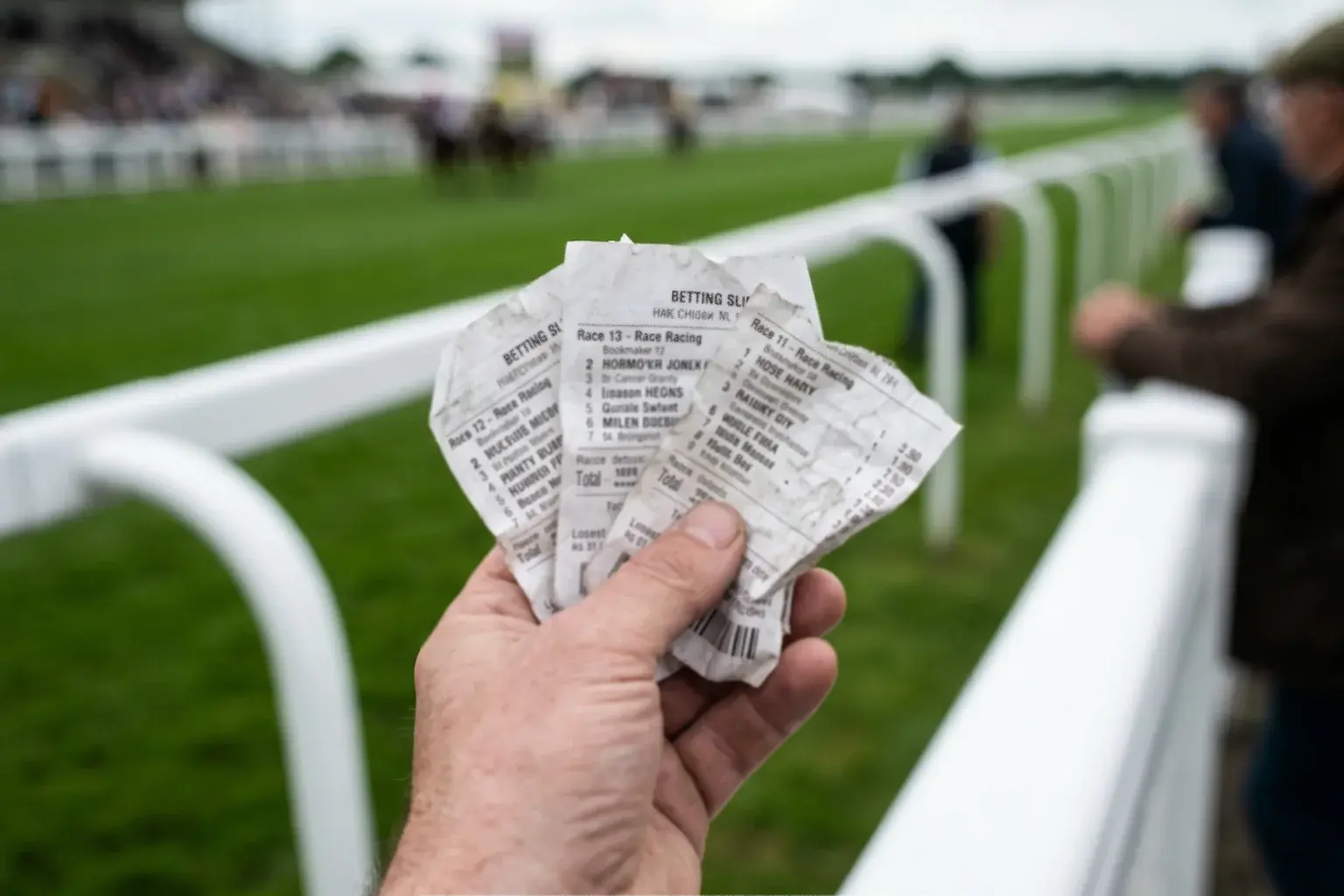
I once chased a losing Saturday afternoon across seven races, increasing my stakes each time, convinced that the next race would turn things around. By the last race at Kempton, I was betting four times my normal stake on a horse I hadn’t even researched. It lost. The entire day’s damage was three times what it should have been, and every pound over my first couple of losses was self-inflicted. That day cost me money. More importantly, it taught me that the biggest threat to a racing bankroll isn’t bad luck or poor form reading — it’s the punter’s own behaviour under pressure.
Of the 12 million people who bet on the Grand National alone, 82% stake five pounds or less and 30% are first-time or once-a-year bettors. Most of those casual punters will make every mistake on this list at some point. The errors aren’t obscure or technical — they’re fundamental, they’re human, and they repeat themselves with remarkable consistency regardless of experience level. What changes with experience isn’t whether you’re tempted to make them; it’s whether you’ve built the systems to prevent yourself from acting on the temptation.
Another common error is misjudging when to use the horse racing cash out feature, often sacrificing long-term value for short-term security.
Staking Without a Plan
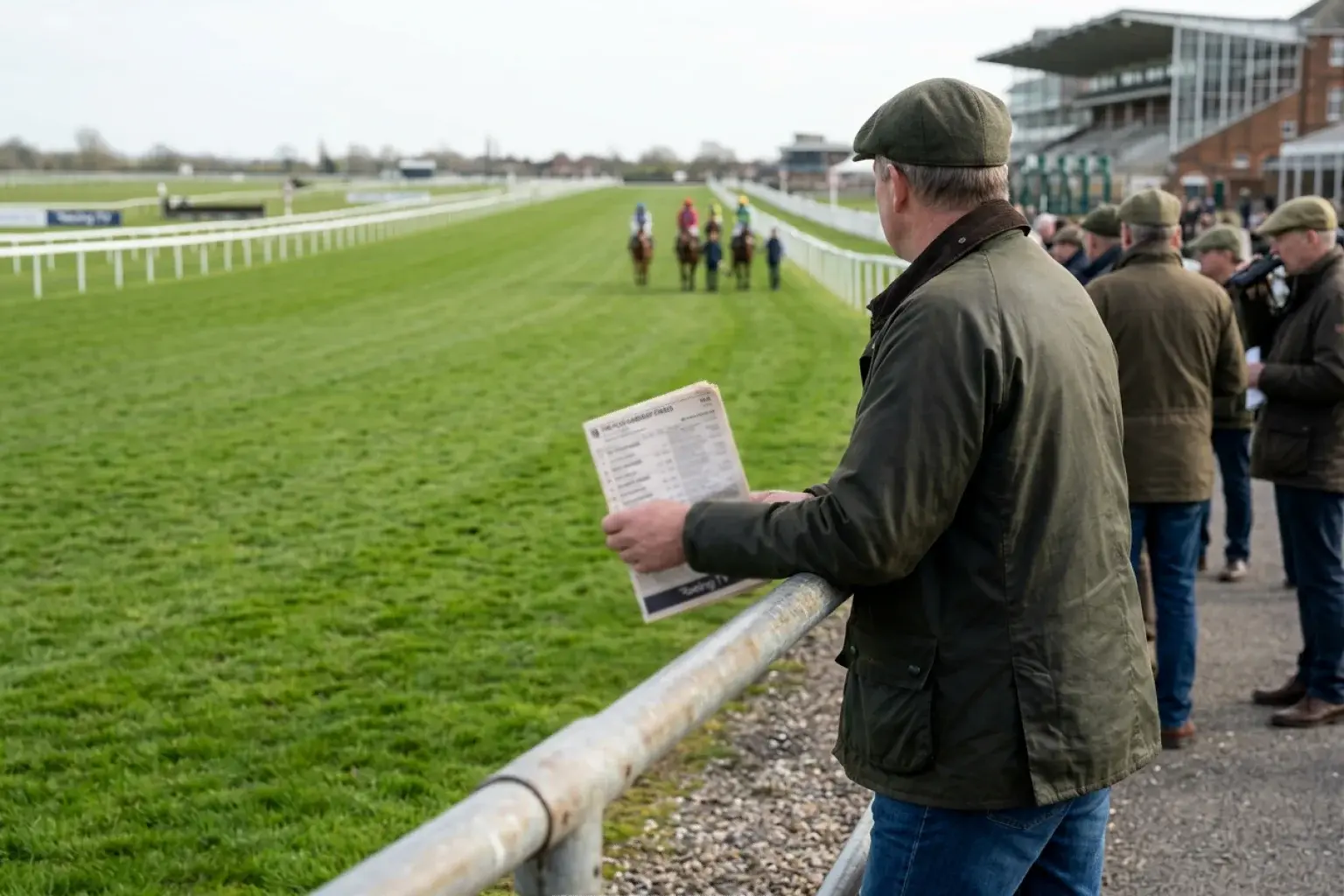
Ask ten punters at a Saturday meeting how much they’ve budgeted for the day, and seven of them won’t have an answer. They’ll buy drinks, manage their food spend, track their parking costs — but the betting money exists in a mental category labelled “whatever feels right at the time.” That mental accounting failure is the single most expensive mistake in racing.
A staking plan doesn’t need to be complicated. The essentials are: a total bankroll (the money you’re willing to risk over a defined period), a maximum percentage per bet (1-3% for serious punters, 5% maximum for recreational ones), and a rule about what happens after losses (the stake stays the same or drops; it never increases). That’s it. Everything else is refinement.
What a staking plan does, beyond the obvious financial protection, is remove decision-making from the moment. When you’re watching the last two furlongs and your horse is fading, the temptation to double the next bet is powerful. If your staking plan says the next bet is 10 pounds regardless, there’s no decision to make. The plan decides for you, and the plan was designed when you were thinking clearly — not when you were watching money disappear.
HBLB chief executive Alan Delmonte noted the challenging nature of recent bookmaker profit patterns through the February and March 2025 season, which underscored just how thin margins run in racing. If the professionals are navigating slim edges, casual punters operating without a plan are working with no edge at all — just variance and hope.
Ignoring the Going and Ground Conditions
I learned this one at Haydock on a rain-soaked November afternoon. My selection had won its previous three starts on good ground and had never seen anything softer than good-to-soft. The going was heavy. I backed it anyway because the form looked strong “overall.” It finished last, beaten 30 lengths, looking like it was running through treacle. The form was strong — on different ground. On that surface, the horse was a different animal entirely.
Going matters more than most form factors. A horse with a five-race winning streak on firm ground can finish out of the places first time on soft, and vice versa. This isn’t a marginal edge — it’s a fundamental filter. Before assessing any race, I check the going and immediately eliminate horses with no form on the prevailing surface. That eliminates 20-40% of the field from contention before I’ve even looked at the form book.
The mistake isn’t just ignoring the going; it’s assuming the going is static. Ground conditions change during a meeting, especially at jumping venues in winter. The going report at 8am might say good-to-soft, but by the 3:30 race it’s soft after a lunchtime downpour. If your selection needs good ground, you need a contingency — either a rule that says you’ll scratch the bet if the ground deteriorates, or a threshold below which you won’t play. I’ve saved more money by scratching bets on unsuitable ground than by any other single discipline.
Chasing Losses and the Escalation Trap
Every punter knows chasing losses is a mistake. Almost every punter does it anyway. The gap between knowing and doing is the most expensive gap in racing.
Chasing operates through a specific psychological mechanism: the break-even effect. After a loss, the next bet isn’t assessed on its own merits — it’s assessed as a chance to get back to where you started. That reframing changes everything. Suddenly, a horse you’d normally pass on looks attractive because it’s priced at 4/1 and a win would erase the earlier loss. The horse hasn’t improved. Your assessment has deteriorated.
The escalation trap is the advanced version: not just betting to recover, but increasing stakes to recover faster. If you’ve lost 50 pounds across three bets and your normal stake is 10 pounds, it would take five winning bets at typical prices to recover. That feels too slow. So you bet 25 pounds on the next selection, needing just a 2/1 winner to break even. The probability of that specific outcome happening at that specific moment is low — and if it doesn’t, you’re now 75 pounds down and the escalation continues.
My anti-chasing rule is mechanical: if I’ve hit my daily loss limit (set at 3% of total bankroll), I stop for the day. No exceptions, no “just one more.” The rule exists precisely because I know that in the moment, I won’t want to stop. The system overrides the impulse, and the system works because it was designed before the impulse existed.
Betting Every Race on the Card
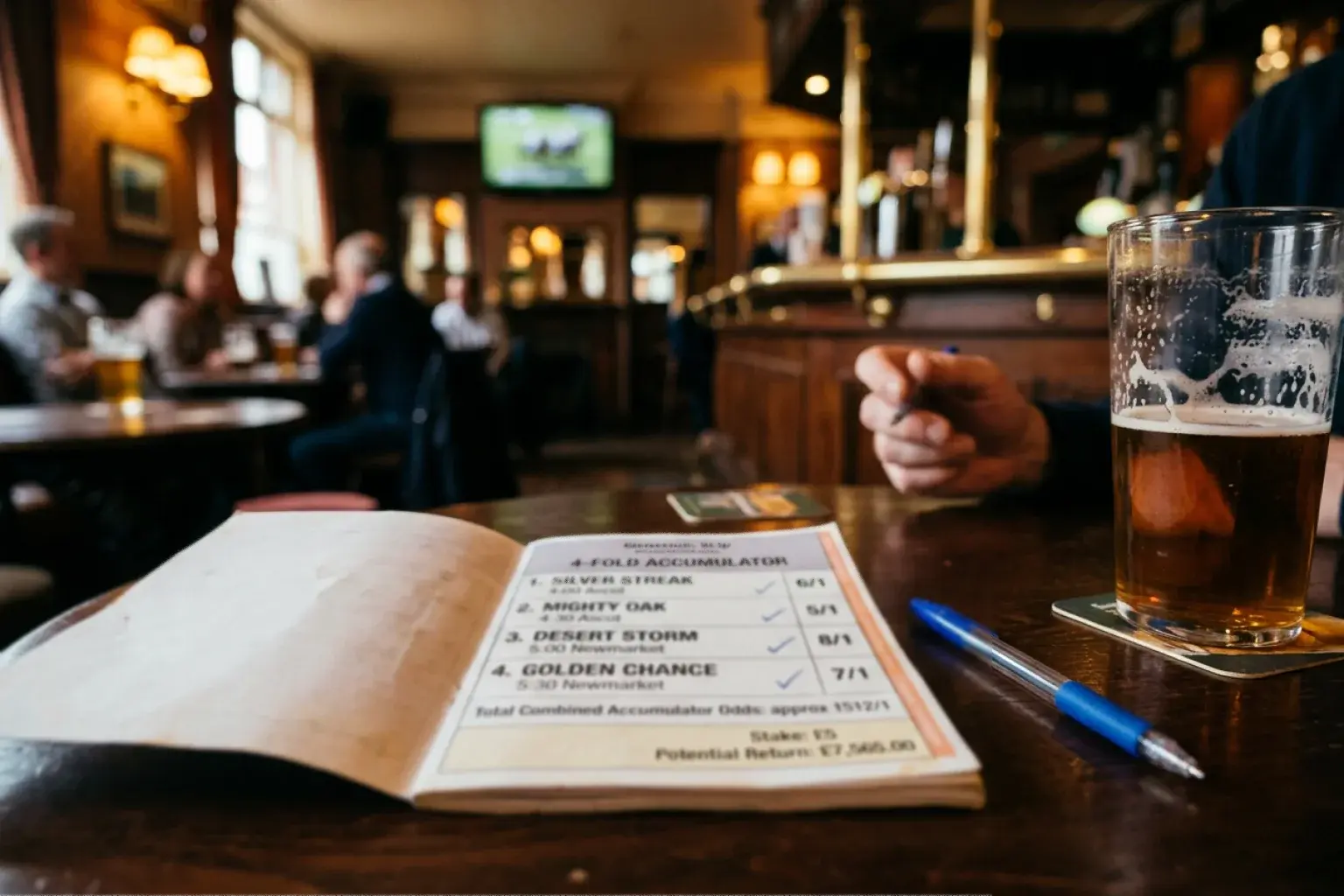
The typical Saturday racing schedule offers 30-40 races across four or five meetings. Having a bet in every one is not thoroughness — it’s a failure of selectivity. The punter who backs something in every race is treating racing as entertainment first and analysis second, and while there’s nothing wrong with entertainment betting, it shouldn’t be confused with value-seeking.
I aim for three to five bets on a busy Saturday. Some Saturdays, I place one. Some weeks, I place none. The quality filter is straightforward: do I have a genuine opinion that differs from the market price? If the market says 5/1 and I think the true probability justifies 3/1, I have a potential value bet. If the market says 5/1 and I think that’s about right, I have no bet. Agreeing with the market is not an edge — it’s the baseline from which edges are measured.
There’s a social pressure element too. When you’re at a meeting with friends and everyone’s queuing at the Tote, sitting one out feels antisocial. I’ve solved this by keeping a tiny “entertainment” pot completely separate from my assessed bets. If I want a 2-pound Tote swinger to stay in the conversation, it comes from the entertainment pot and never appears in my records. That separation keeps my analytical process clean without requiring me to be the killjoy at the bar.
Treating Tips as Substitutes for Analysis
A friend told me his “inside information” about a horse at Ascot. Worked closely with the yard, knew the horse was primed, connections were confident. I backed it. It ran well for three furlongs and faded to eighth. The tip wasn’t necessarily wrong — the horse might genuinely have been in form — but a tip without context is noise without signal. I didn’t know why the horse was expected to win, under what conditions, or how the tip’s information had been assessed. I was betting on someone else’s conviction without understanding the foundation for that conviction.
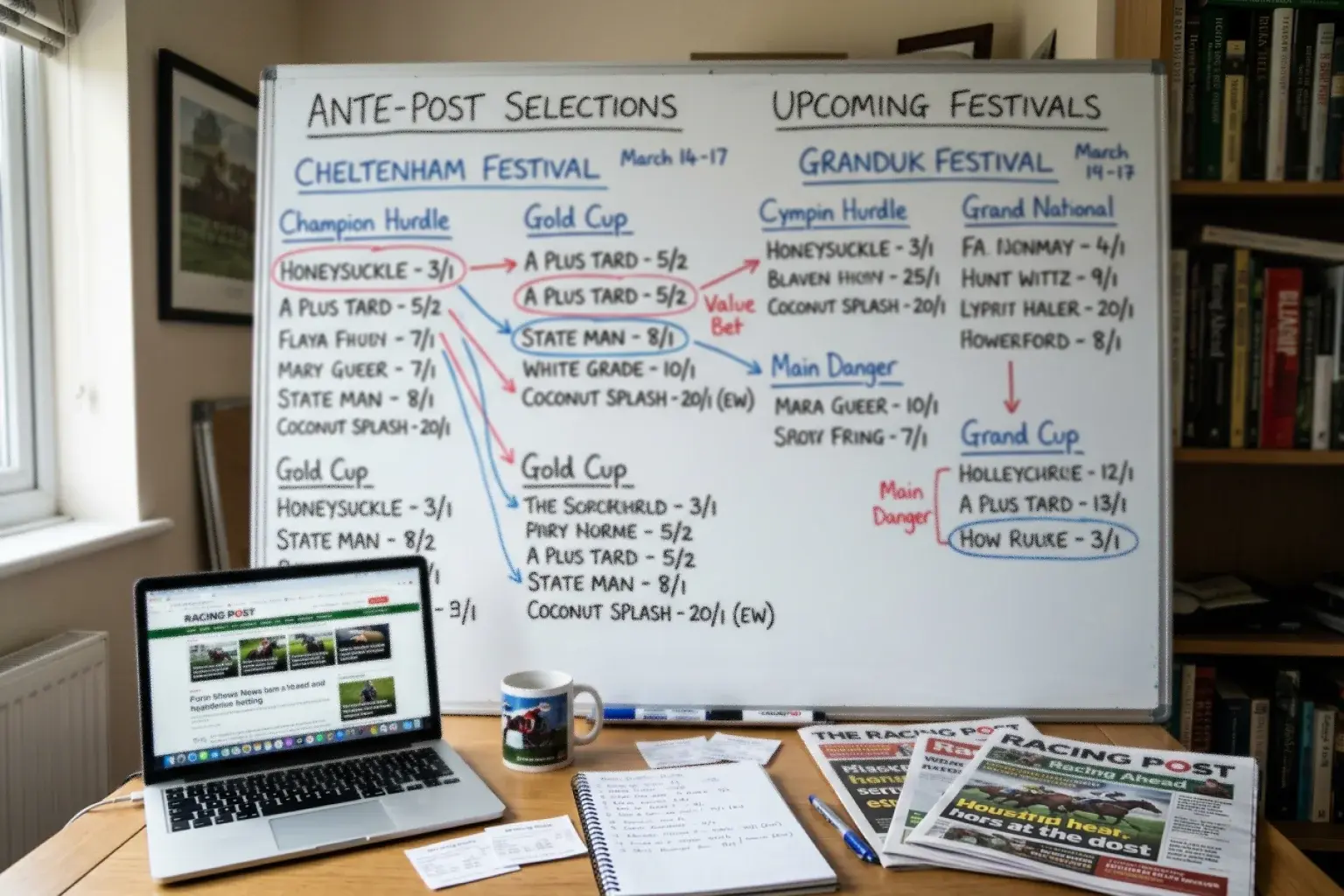
Tips have a role, but it’s a starting point, not an endpoint. A credible tip points you toward a horse worth researching. It doesn’t replace the research. The form guide still needs reading. The ground suitability still needs checking. The price still needs assessing. If the tip survives your own analysis, back it. If it doesn’t, leave it — regardless of who provided it or how confident they sounded.
The worst version of tip dependency is following a tipping service without tracking results. Many services advertise headline winners without mentioning the losing streak that preceded them. “50/1 winner last month” tells you nothing about the 47 losers before it. If you use a tipping service, track every tip they give you over a minimum of 200 bets before drawing any conclusions about profitability. Anything less is statistical noise.
Avoid these costly errors by following the expert analysis provided by the premier UK horse racing betting guide.
One Season of Honest Record-Keeping Changes Everything
Every mistake on this list shares a common root: the punter doesn’t know their own numbers. They don’t know their win rate, their average odds, their return on investment, or their loss pattern. Without that data, improvement is guesswork.
I started keeping a simple spreadsheet eight years ago: date, race, horse, odds, stake, result, running total. Nothing sophisticated. After one full season, patterns emerged that I’d never have spotted from memory. I discovered I was profitable on handicap hurdles and consistently unprofitable on novice chases. I discovered I lost money on horses shorter than 3/1 and made money on horses between 5/1 and 12/1. I discovered that 60% of my losses came from Friday evening meetings where I was betting tired after a full work week.
Those discoveries were worth more than any betting system, any tipster, and any form analysis technique combined. They told me where my genuine edges lay and where I was leaking money through pattern, not through bad luck. One season of honest records. That’s the cost of knowing where you actually stand.