
Cash-Out Features: Managing Margins at UK Bookmakers
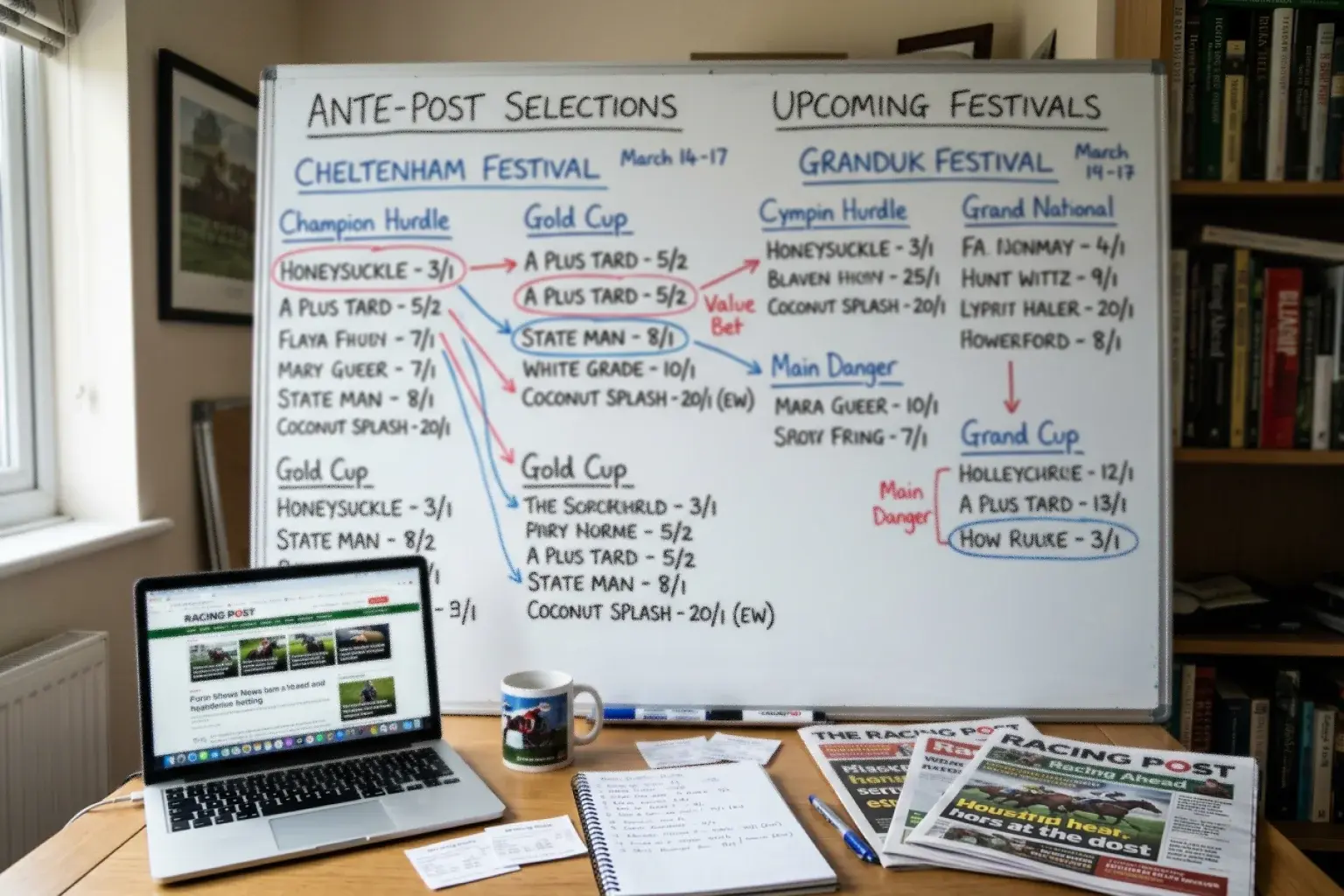
I had a 50-pound ante-post bet on a Cheltenham Gold Cup contender at 14/1. Three weeks before the race, my horse picked up a minor setback and was rated doubtful. The cash-out offer on my screen read 320 pounds — a 270-pound profit without the race even being run. I stared at that button for ten minutes. I took it. The horse recovered, ran, and won at 8/1. The full return would have been 750. That single experience taught me everything I needed to know about the psychology of cash out and almost nothing about the maths.
Cash out is the most transformative feature betting operators have introduced in the past decade. UK platforms have collectively invested around 150 million dollars annually in technology development, and cash out sits at the centre of that investment. The feature generates enormous engagement — punters check their bets more frequently, interact with the app more often, and make more decisions per bet than they ever did in the days of place-it-and-wait.
That engagement is precisely why you need to approach cash out with cold logic rather than warm instinct. Every time that green button appears with a number on it, the bookmaker is offering you a deal. Deals are never offered because they’re generous to the person accepting them. They’re offered because the expected value favours the person proposing them.
How Cash Out Prices Are Actually Calculated
The cash-out offer is not based on what the bookmaker thinks will happen. It’s based on the current market price of your bet, minus a margin. Understanding this distinction is worth hundreds of pounds a year to any regular punter.
When you place a bet at 10/1 and the horse’s price shortens to 5/1 before the race, the implied probability has roughly doubled. Your bet has increased in value proportionally. The theoretical fair cash-out amount would be the current implied probability multiplied by your potential return, but the actual offer you receive is always less than that — typically 5-15% less. That gap is the bookmaker’s margin on the cash-out transaction, and it’s a separate profit centre from the original bet’s margin.
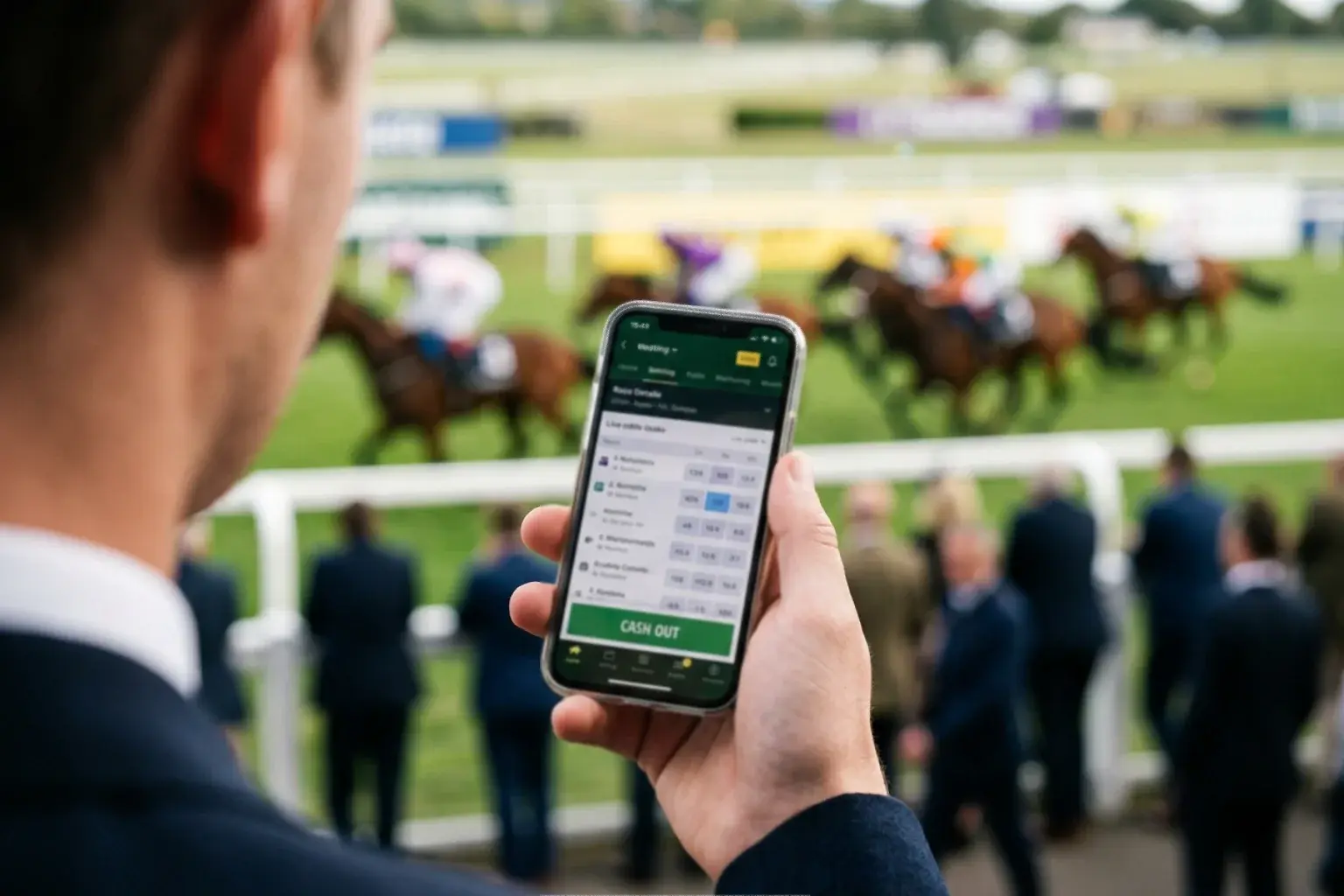
For in-play cash out, the margin is even wider. Once a race has started, the odds update continuously based on the position of runners, and the cash-out offer adjusts accordingly. But in-play margins are substantial — 15-25% in many cases — because the information is fast-moving and the bookmaker needs to protect against offering a cash out just before a horse falls or fades. I’ve seen the cash-out price on a horse leading by ten lengths over the last two fences still carry a 20% discount to the theoretical fair value. The bookmaker is pricing in uncertainty that your eyes tell you doesn’t exist — and, admittedly, they’re right more often than your eyes are.
The practical implication: every time you cash out, you’re accepting a price that’s structurally worse than the theoretical fair value of your position. This doesn’t mean cashing out is always wrong. It means the default position should be to let bets run, and cashing out should require a specific, rational reason that overcomes the mathematical disadvantage.
When Cashing Out Makes Mathematical Sense
There are exactly three situations where I believe cashing out is the correct play, and none of them involve panic or excitement.
First: when new information has genuinely changed your assessment of the bet. If you backed a horse ante-post and it’s now carrying an injury concern that wasn’t present when you placed the bet, cashing out locks in profit on a position that’s degraded in quality. You’re not paying the cash-out margin — you’re buying insurance against information the market hasn’t fully priced. This is the scenario closest to my Cheltenham Gold Cup example above, and ironically, the one where I made the “right” decision for the wrong outcome.
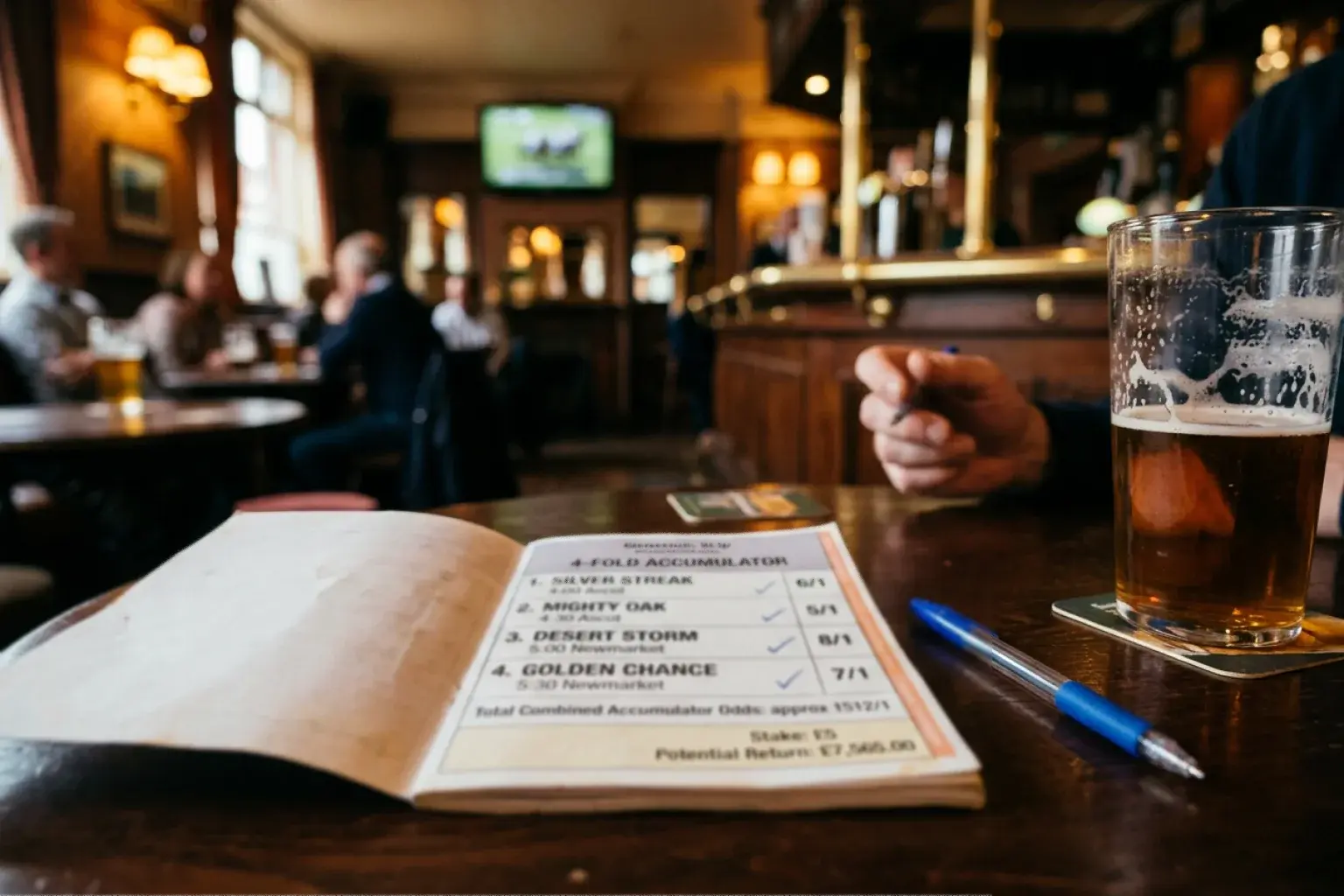
Second: when your bet forms part of a multi-leg accumulator and you can cash out to guarantee a profit after most legs have won. If three of your four legs have landed and the final leg is about to run, cashing out the entire acca at a profit removes the variance of the last leg. The guaranteed return versus the gambled return is a legitimate risk management decision, not an emotional one, provided you’ve calculated the expected value of letting it ride versus taking the cash.
Third: when bankroll constraints make the cash-out amount disproportionately valuable. If you’re working with a small bankroll and a cash-out offer represents 20% or more of your total funds, the utility value of that guaranteed money may exceed the mathematical expectation of letting the bet run. This is a personal-finance judgment, not a pure probability one, and it’s the hardest to generalise because it depends entirely on your individual circumstances.
The Psychology Trap: Why Operators Love Cash Out
Average betting turnover per race dropped 8% in the 2024/25 season and 19% compared with 2021/22. In an environment where per-race spending is declining, operators need alternative revenue mechanisms. Cash out is among the most effective, because it generates margin on bets that have already been placed — effectively charging you twice: once when you placed the bet and again when you close it early.
The psychological hooks are well-designed. Loss aversion — the tendency to feel losses more acutely than equivalent gains — drives premature cash outs on bets that are currently winning. A punter with a 200-pound potential return will cash out at 140 not because 140 is the right price, but because the thought of watching that 200 evaporate is more painful than the regret of leaving 60 on the table. Operators understand this deeply, and the prominence of the cash-out button on the bet slip (always visible, always green, always showing a real-time number) is engineered to trigger that loss aversion at the moments when it’s most intense.
The opposite trap catches punters too. When a bet is losing, the cash-out offer shrinks to a fraction of the original stake, and many punters let it ride to zero rather than recovering 30% of their money. The logic should be symmetrical — if you’d cash out a winning bet to lock in 70% of the potential return, you should equally cash out a losing bet to recover 30% of the stake — but it rarely works that way in practice because the situations feel psychologically different.
My rule is simple: I decide before placing any bet whether I’ll consider cashing out, and under what conditions. That pre-commitment removes the emotional element. If I haven’t decided in advance that a specific scenario would trigger a cash out, no scenario does. The discipline framework I use for staking applies equally to cash-out decisions: plan first, execute second, never improvise.
Partial Cash Out and How It Changes the Equation
Partial cash out — where you close a percentage of your bet while leaving the rest active — is a genuinely useful feature when applied correctly. It’s also the most misunderstood variant of cash out, because most punters use it as a compromise when they can’t decide between cashing out fully and letting the bet run.
The maths of partial cash out is proportional. If your full cash-out offer is 200 pounds and you take a 50% partial cash out, you receive 100 pounds and your remaining bet runs at half the original stake. The margin the bookmaker takes is the same percentage as a full cash out, applied to the portion you close. There’s no mathematical advantage to partial over full on a per-pound basis — it’s purely a risk-management tool.
Where partial cash out earns its keep is in ante-post markets where the price has moved significantly in your favour. Suppose you backed a horse at 20/1 for Royal Ascot with a 20-pound stake. By the time of declarations, the horse is 8/1 and your cash-out offer is 180 pounds. A 50% partial cash out returns 90 pounds — already 70 pounds more than your total stake — while leaving a 10-pound equivalent running at 20/1 for a potential 200-pound return. You’ve locked in profit, reduced risk, and maintained upside. That’s the optimal use case.
The suboptimal use case is partial cashing out during a race because you’re nervous. If the reason you’re cashing out half is anxiety rather than a rational risk-reward calculation, you’re paying the bookmaker’s margin for emotional comfort. That’s an expensive form of therapy.