

Cheltenham Betting Angles: Maximizing Four-Day Returns
The first time I went to Cheltenham Festival, I burned through my entire bankroll by lunchtime on Day One. Champion Hurdle, Arkle, Supreme — I had a bet in every race, each one poorly staked and emotionally driven. I left Prestbury Park lighter in the wallet and considerably wiser about what four days of high-intensity racing actually demand from a punter.
William Hill projects roughly 450 million pounds to be wagered across the four days of Cheltenham Festival 2026. Lee Phelps, speaking for the bookmaker, described the battle between the layers and the punters over those four days as “unrivalled in Jumps racing.” He’s not exaggerating. All 28 races at Cheltenham 2025 featured in the top 31 by betting turnover for the entire year — only the Grand National, the Derby, and the Scottish National joined them. That concentration of money into a single meeting creates unique market dynamics that reward preparation and punish impulse.
What makes Cheltenham different from any other festival isn’t just the turnover volume. It’s the depth of ante-post markets that open months in advance, the sheer quality of the fields (every race is competitive, every favourite is vulnerable), and the emotional intensity that pushes casual punters toward bad decisions. This guide is about structure — how to approach the four days with a plan that keeps you solvent and sharp through the final race on Gold Cup Friday.
Before the festival begins, savvy punters should take advantage of the latest horse racing free bets in the UK to boost their starting bankroll.
The Races That Matter Most: Champion Hurdle to Gold Cup
Twenty-eight races across four days sounds manageable until you realise each one carries the depth and quality of a standalone feature event anywhere else in the calendar. I don’t bet every race at Cheltenham anymore, and that single change improved my festival results more than any form study ever did.
The seven championship races anchor the meeting: the Supreme Novices’ Hurdle, Arkle Challenge Trophy, Champion Hurdle, Queen Mother Champion Chase, Stayers’ Hurdle, Ryanair Chase, and Cheltenham Gold Cup. These attract the strongest ante-post markets, the deepest liquidity, and the best-formed horses. They’re also where the bookmakers’ margins tend to be thinnest, because competitive pricing on headline events is a marketing necessity.
The big-field handicaps — the Coral Cup, County Hurdle, Martin Pipe, Grand Annual — are where each-way punters traditionally hunt value. Fields of 20 to 28 runners create natural pricing inefficiency. When a handicapper has to separate two dozen horses by ability and assign weights accordingly, gaps emerge. The challenge is that these are genuinely open races; strike rates for favourites in Cheltenham handicaps sit around 10-12%, making them high-variance propositions even for experienced analysts.
My approach: allocate 60% of festival budget to the championship races where form analysis is most reliable, and 30% to two or three carefully selected handicap bets where I’ve identified a specific angle (course form, going preference, trainer record at the festival). The remaining 10% stays in reserve for live opportunities — a drift I didn’t expect, a market overreaction to morning news.
Ante-Post vs Day-of: When to Strike on Cheltenham Markets
I backed a Champion Hurdle contender in November at 12/1 who went off at 5/2 the following March. That single bet taught me more about ante-post value at Cheltenham than a decade of reading preview articles. The price compression between November and race day is where the real money is won or lost.
Cheltenham ante-post markets typically open in earnest after the previous season’s festival ends, with initial prices available by May. The serious ante-post window runs from October to February, when form from the current season’s trials begins to clarify the picture. Prices shorten most dramatically in three phases: after key trial results (the Christmas meetings, the Dublin Racing Festival, and Trials Day at Cheltenham itself), after the five-day declaration stage, and on the morning of each race.
The ante-post advantage is straightforward: you get better odds in exchange for accepting non-runner risk. If your selection doesn’t make it to the festival — injury, change of plan, insufficient entries — your stake is gone. No refund. That risk premium is built into ante-post prices, and it’s genuinely generous at Cheltenham because the festival has a historically high rate of intended runners actually lining up.
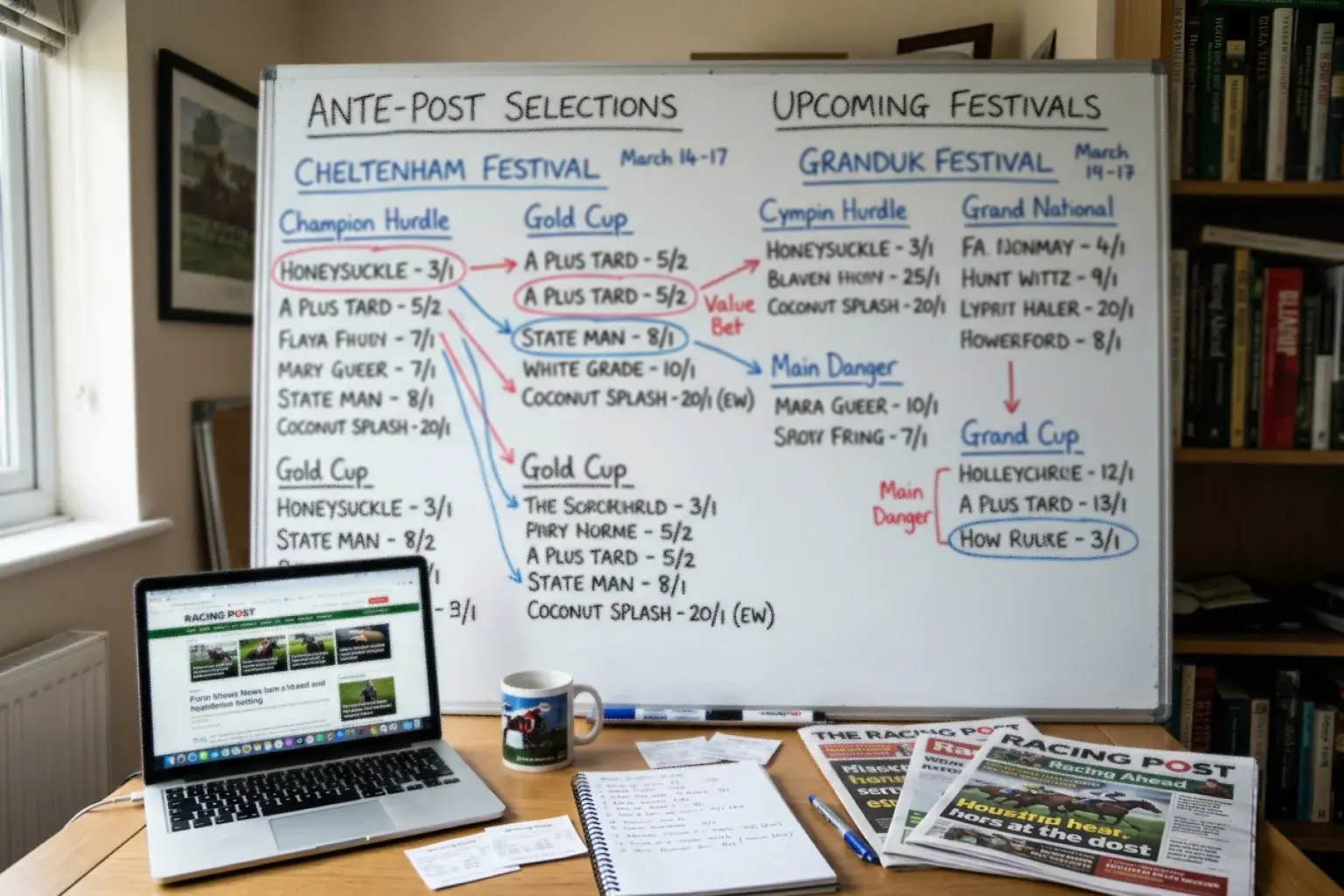
For championship races, I look to place ante-post bets between late November and mid-January, when trial form is beginning to emerge but hasn’t yet been fully priced in. For handicaps, I wait until the weights are published and the entries confirm a realistic field, which usually means late February into early March. Backing a handicapper ante-post before weights are known is guesswork dressed up as strategy.
Day-of markets still offer value, but in a different form. Morning money reshapes the market, and if you disagree with where the weight of cash has pushed a price, there’s an edge in going against the market flow — provided your reasoning is based on form analysis rather than contrarianism for its own sake.
Find the most competitive odds for the festival at the best horse racing betting sites available this season.
Festival Staking: Managing Four Days of High-Volume Betting
Here’s the mistake I see every March in my local: someone has a great Day One, doubles their stakes on Day Two, loses heavily, then chases through Days Three and Four. By Gold Cup afternoon they’re betting on the last race just to break even. The four-day structure of Cheltenham is a bankroll management test more than anything else.
I divide my total festival bankroll into four equal daily portions before the meeting starts, and I don’t redistribute between days. A strong Tuesday doesn’t inflate Wednesday’s budget. A poor Thursday doesn’t borrow from Friday. This prevents the emotional escalation that four consecutive days of racing almost inevitably produce.
Within each day, I cap individual bets at 5% of the daily allocation for championship races and 2-3% for handicap plays. That means a festival bankroll of 400 pounds gives me 100 per day, with individual bets of 2-5 pounds on championships and 2-3 on handicaps. Those numbers sound modest because they are — and that modesty is the entire point. Cheltenham is a marathon compressed into four days, and the punters who survive it intact are the ones who treated their bankroll like it had to last.
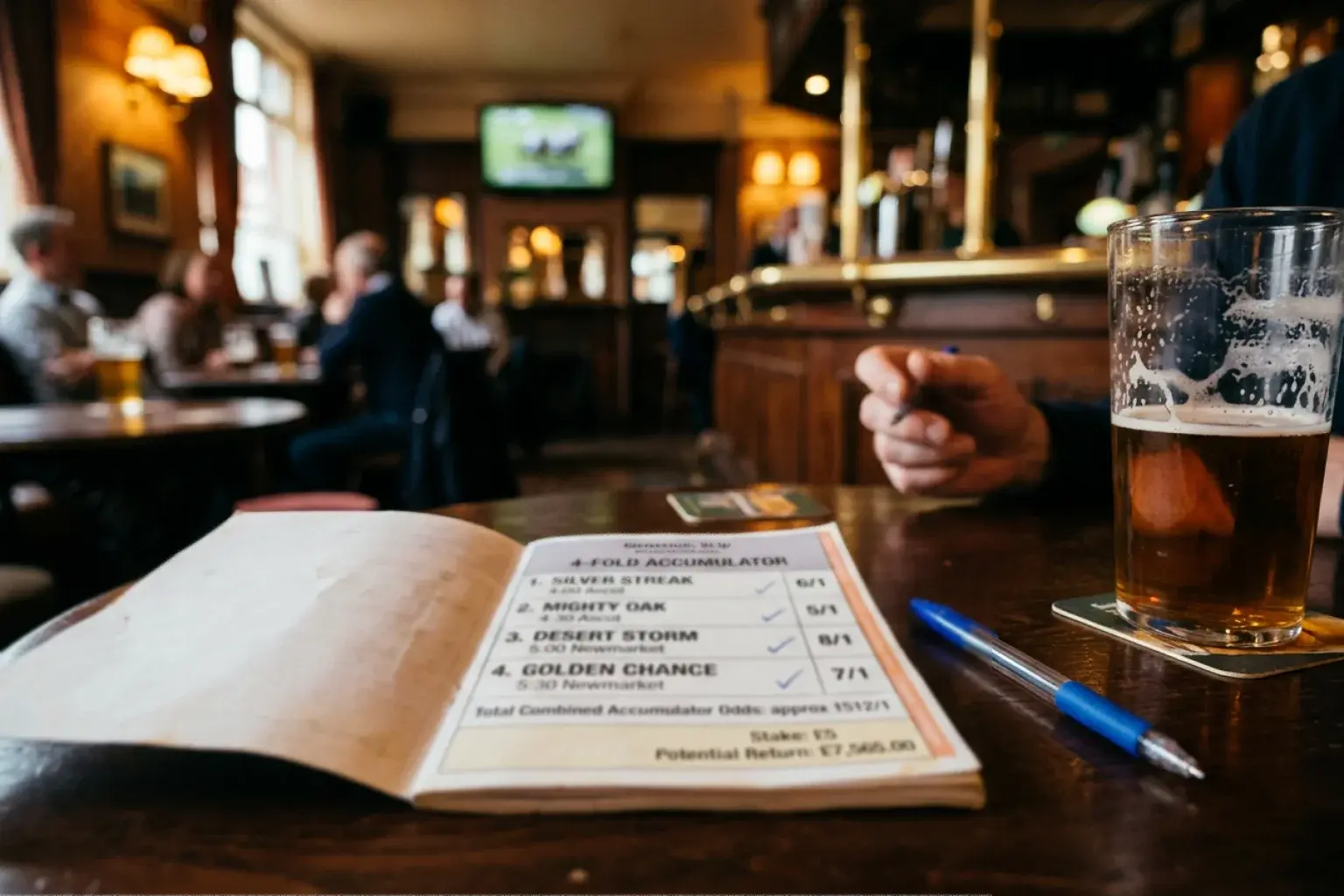
One practical tip that’s saved me more than once: write your selections down on paper the night before each day’s racing, with the stake next to each one. If you deviate from that plan in the heat of the afternoon, you’ll know exactly when and why you went off-script. That self-awareness alone is worth more than any tipping service.