
BOG Benefits: Securing Higher Payouts on Winning Bets
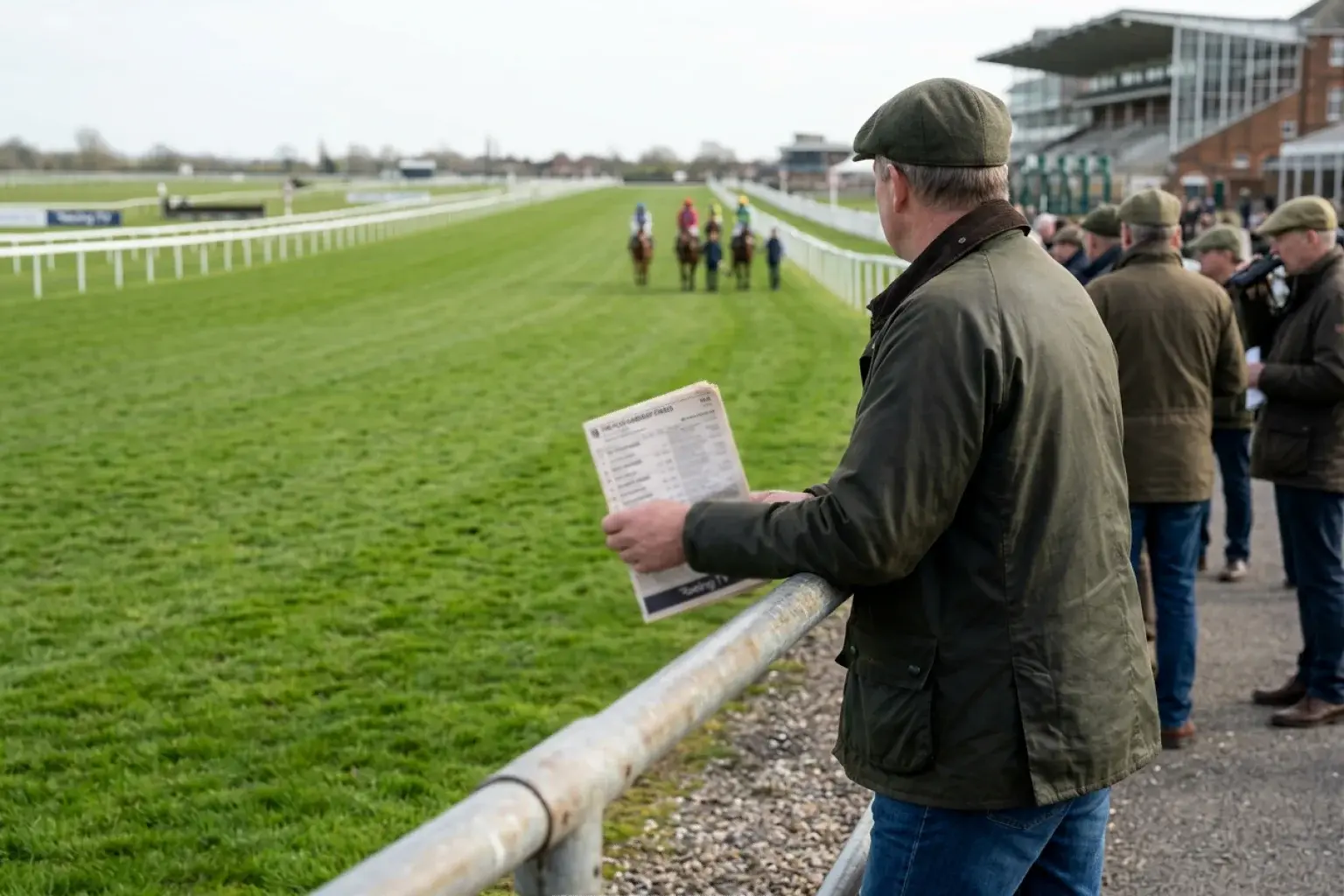
I backed a horse at Newbury last autumn at 10/1 on the morning of the race. By the time the stalls opened, the Starting Price had drifted to 14/1. My bookmaker paid me at 14/1 without me lifting a finger. That difference — an extra four points of odds on a single bet — is the entire promise of Best Odds Guaranteed, and it is one of the few promotions in horse racing betting that consistently delivers real, measurable value rather than marketing noise.
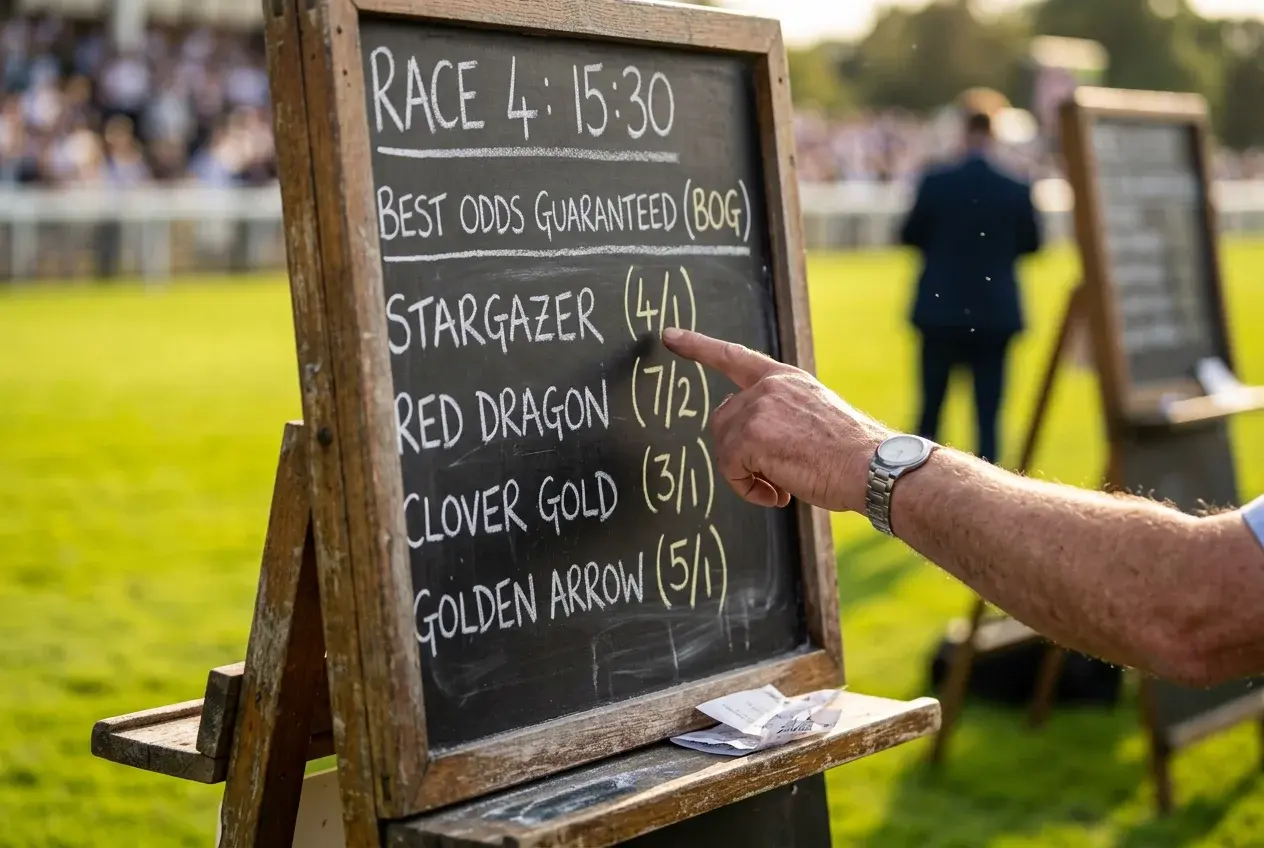
Best Odds Guaranteed, or BOG, is a pricing guarantee offered by most major UK bookmakers on horse racing. The principle is straightforward: if you take a price on a horse and the Starting Price (SP) at the off is higher than the odds you accepted, the bookmaker pays you at the higher price. If the SP is lower, you keep the odds you originally took. Either way, you cannot lose out by betting early.
Remote horse racing betting generated £766.7 million in gross gambling yield for licensed operators in the financial year ending March 2025, and a significant chunk of that volume passes through markets where BOG applies. The guarantee matters because horse racing odds are inherently volatile — prices shift from morning until post time as money flows in from punters, syndicates, and trading desks. Without BOG, taking a price at 9am carries a genuine risk: the horse might open at a bigger number, and you have locked yourself into less favourable terms. With BOG active, that risk disappears entirely.
The UK supports more than 120 licensed betting operators, and the vast majority of them now offer some version of BOG on domestic racing. But the terms differ — sometimes dramatically. Stake limits, race exclusions, and restrictions on specific meetings all shape how much BOG is actually worth to you in practice. What follows is a detailed breakdown of how the guarantee functions, where the real ROI sits, and how to structure your approach to extract maximum value from it across the 2026 racing calendar.
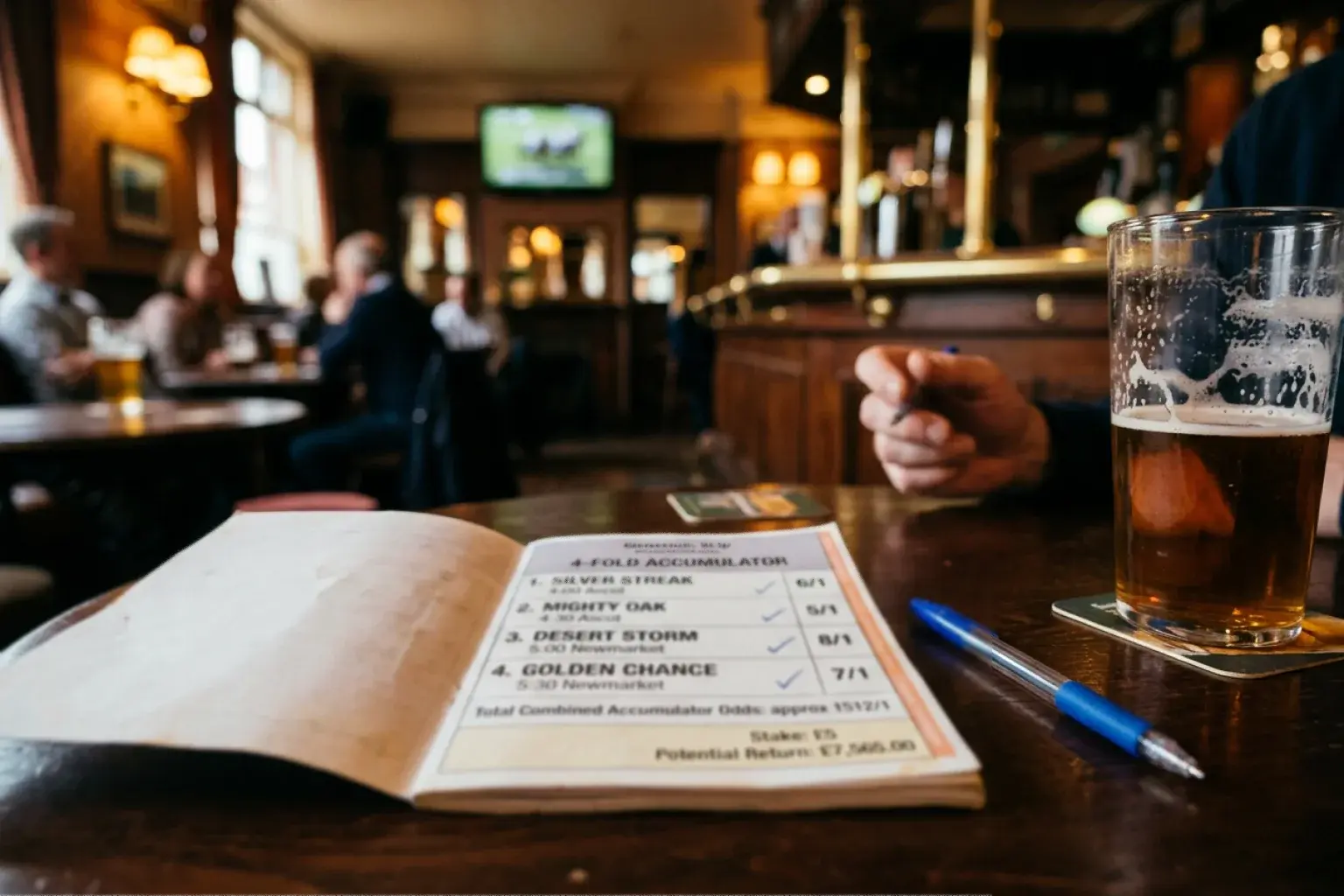
Securing the best odds is particularly important when applying horse racing accumulator tips, as price differences multiply across each leg.
How BOG Works: From Morning Price to SP
The morning I first grasped how BOG really works, I was sitting in a Kempton Park car park, watching odds move on my phone screen like a slow-motion auction. A horse I fancied opened at 8/1 in the early shows, drifted to 10/1 as the morning wore on, then got backed in sharply to an SP of 6/1. Had I taken 8/1 without BOG, I would have been paid at 8/1 regardless. With BOG, the same outcome: 8/1, because the SP was lower. But if the reverse happened — if the SP had been 12/1 — the bookmaker would have upgraded my payout to the bigger number.
The mechanism involves three price points that every punter should understand. First, the early price or morning price: this is the odds a bookmaker quotes from roughly 8am or 9am on the day of the race, sometimes the evening before for feature meetings. Second, the price at the time you place your bet, which may differ from the early show if you come to the market later. Third, the Starting Price, which is the official odds returned at the moment the race begins, determined by on-course bookmakers and independent assessors.
When BOG is active, the bookmaker compares the odds you took at the point of bet placement with the SP. The higher of the two is what you receive. The comparison is automatic — you do not need to request it, flag it, or contact customer services. Your account simply gets credited at the better price if the SP exceeds your original odds.
One detail that catches people out: BOG applies to the odds you accepted, not the best odds that were available at any point during the day. If a horse was showing 12/1 at 10am but you did not back it until 11am when the price had shortened to 9/1, your BOG comparison runs from 9/1, not 12/1. The lesson is simple — if you like a price, take it early. BOG protects you if the market moves up, and you have already locked in the best terms available to you at the time.
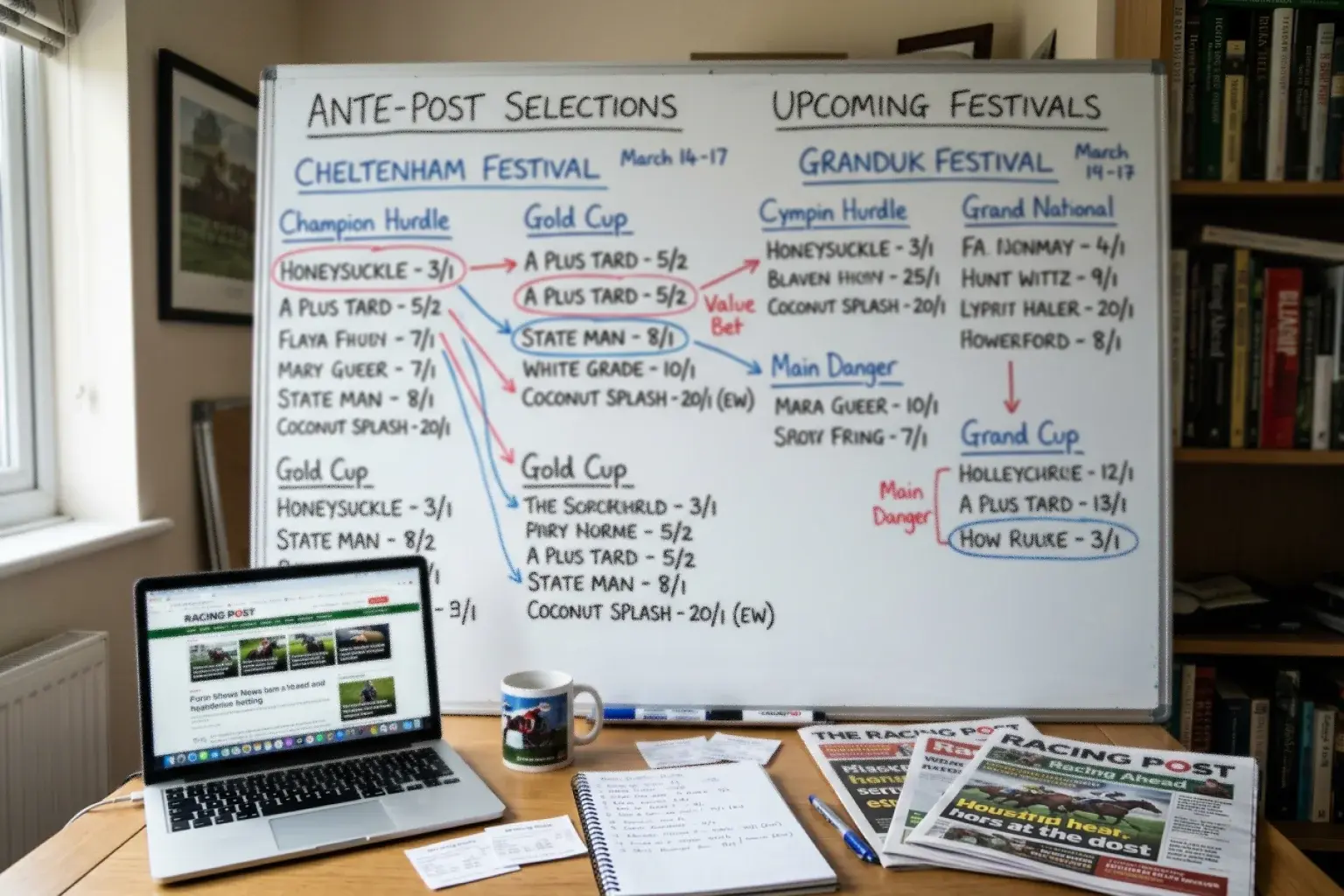
Most BOG offers cover UK and Irish horse racing on the day of the race. They do not typically extend to ante-post markets, where bets are placed days, weeks, or months before the event. The guarantee kicks in only once final declarations are confirmed and day-of-race markets open. This distinction matters, because ante-post betting carries its own risk-reward profile that operates entirely outside the BOG framework.
The Real ROI Impact of Best Odds Guaranteed
Numbers do not lie, and the numbers around BOG make a compelling case. I tracked my own BOG upgrades across 14 months of racing in 2024 and early 2025 — a period covering 412 bets on UK and Irish flat and jump meetings. Of those, 73 received a BOG upgrade where the SP exceeded my original price. The average upgrade was 1.8 points of odds. Across those 73 bets, BOG added a net £387 to my returns on level stakes of £10 per bet. That is not life-changing money, but it is pure profit I would not have seen without the guarantee.
The broader market data reinforces this. Average turnover per race on Core Fixtures — the bread-and-butter midweek and Saturday cards — fell by 14.4% year on year in the first quarter of 2025, while Premier Fixtures held steady. What that tells us is that the casual and mid-tier market is thinning out, which paradoxically creates more volatile SP movements. Thinner liquidity means bigger swings between morning prices and Starting Prices. Bigger swings mean more frequent and larger BOG upgrades for those who are in the market early.
The practical impact scales with volume. If you place 500 bets a year at an average stake of £10, and roughly 15–20% of those trigger a BOG upgrade averaging 1.5 to 2 points, you are looking at an additional £750 to £1,000 annually in improved returns. That is the equivalent of finding an extra 50 to 100 winning bets at short prices — except you did not need to pick a single additional winner to earn it.
Over 80% of bets on the Cheltenham Festival in 2024 were placed via mobile, and mobile punters tend to bet earlier in the day when they spot a price they like during a commute or a lunch break. Those early bets are exactly the ones most likely to benefit from BOG, because the market has the most room to move between placement and the off. Mobile-first punters are, almost by accident, the biggest beneficiaries of the guarantee.
BOG vs Starting Price: A Worked Comparison
Let me walk through a concrete example to make the maths tangible. Suppose you back a horse at 8/1 with a £10 stake. Without BOG, your return on a winning bet is £90 (£80 profit plus your £10 stake). Now suppose the SP comes back at 11/1. With BOG, your return jumps to £120 (£110 profit plus £10 stake). That is a 33% increase in your payout from a single price movement, and you did nothing to earn it beyond placing your bet with a bookmaker who offers the guarantee.
Flip the scenario. You take 8/1 and the SP is 5/1. Without BOG, you still get 8/1 — you took the price. With BOG, you also get 8/1, because the guarantee compares and takes the higher. No downside. This asymmetry is what makes BOG genuinely rare among betting promotions: there is no catch, no wagering requirement, no hidden condition that erodes the value. You simply receive the better price every time.
Now scale that over a busy Saturday card with seven races. If you have a bet in each, and two or three of those runners see their SP drift beyond your price, the aggregate uplift across a single afternoon can be substantial. Over a full jump season from October to April, with multiple fixtures each week, a disciplined punter can accumulate hundreds of pounds in BOG upgrades without altering their selection process at all.
Compare this with the alternative: betting at SP. Taking SP means you accept whatever price the market settles on at the off. You have no agency, no price lock, and no upside from early moves. On days when favourites shorten, SP bettors receive shorter prices than the morning shows. On days when prices drift, SP bettors get the drift — but so do BOG bettors, with the added safety net of their original price as a floor. BOG dominates SP betting in every scenario. The only reason to take SP is if you cannot watch the markets at all before a race, and even then, most BOG bookmakers allow you to take an early price at any point before the off.
Which Bookmakers Offer BOG in 2026 — and on What Terms
Walking through the paddock at Ascot a few years back, I overheard two men arguing about whether their bookmaker still offered BOG on evening meetings. One was right, one was wrong, and neither had bothered to check the terms. That conversation neatly captures the state of BOG in 2026: nearly every major operator offers it, but the fine print varies enough to make or break its value.
The UK market hosts more than 120 licensed operators, and the competitive pressure to offer BOG is intense. It has become a baseline expectation among regular racing punters — the equivalent of free delivery in online retail. Operators who dropped BOG or restricted it heavily would face immediate customer attrition to rivals. As a result, the major names in the market — the established high-street brands, the exchange-affiliated bookmakers, and the newer digital-first operators — all run BOG in some form on UK and Irish racing.
Where they diverge is in the details. Some apply BOG to all UK and Irish races without exception. Others restrict it to specific meeting types — for example, offering it on afternoon fixtures but not evening all-weather cards. A few impose maximum stake limits for BOG eligibility, meaning bets above a certain threshold (commonly £500 to £1,000, though it varies) receive BOG only on the portion within the limit. And some bookmakers reserve the right to withdraw BOG on selected high-profile races or festivals where the market dynamics make it commercially painful for them.
The practical approach I recommend is to hold active accounts with at least three bookmakers who offer BOG with different terms. This gives you coverage: if one suspends BOG on a particular meeting, another is likely still running it. It also allows you to compare early prices across operators and take the best available number on any given race, knowing that BOG will protect you regardless of which account you use. Over a year of regular betting, this multi-account strategy compounds into a meaningful edge — Richard Wayman at the BHA has noted the impact of affordability checks pushing some punters toward fewer accounts, but for those who can maintain several, the benefits are clear.
One more nuance worth noting: some operators extend BOG to races in other jurisdictions — French racing, for instance, or selected fixtures in the US. These extensions tend to be promotional and temporary, but they are worth watching. If your bookmaker is running BOG on a French Group 1, the value equation is the same as domestic racing, and you may face thinner competition from punters who do not follow overseas markets closely.
Common BOG Restrictions and Exclusions
The restrictions that matter most in practice are stake caps, time limits, and meeting exclusions. Stake caps are the most common — a bookmaker might honour BOG on the first £250 or £500 of any single bet, with the remainder settled at the original odds. For recreational punters staking £5 to £20 per bet, this is irrelevant. For serious bettors placing three-figure stakes, it can clip the upside significantly.
Time limits typically require you to place the bet after a certain hour on race day — usually after the final declarations are confirmed and the morning prices are published. Bets placed the previous evening on an early market may not qualify. This is a sensible restriction from the bookmaker’s perspective (overnight prices are less reliable), but it catches out punters who lock in prices during evening previews thinking they are covered by BOG.
Meeting exclusions are rarer but do occur. Some bookmakers have historically suspended BOG during the Cheltenham Festival or on Grand National day, when market volatility is at its peak and the potential liability from BOG upgrades is greatest. Others maintain BOG throughout the major festivals but tighten their stake limits for the duration. The pattern has been inconsistent enough that checking terms on the morning of any festival meeting is a non-negotiable habit.
A subtler restriction applies to enhanced odds and price boost promotions. If you take an enhanced price — say, a horse boosted from 6/1 to 8/1 as a promotional offer — BOG typically does not apply. The bookmaker considers the enhanced price to be outside normal market terms. This is reasonable, but it means you need to decide: take the boosted price without BOG protection, or take the standard market price with BOG active. In most cases, the standard price with BOG delivers better expected value than an enhanced price without it, especially on volatile markets where SP drift is likely.
How to Maximise BOG: Timing, Markets, and Multi-Account Approaches
Here is where nine years of doing this for a living distils into something practical. Maximising BOG is not about clever tricks or exploiting loopholes — it is about disciplined habits that compound over time. The first habit is price-checking across at least three bookmakers before placing any bet. If the same horse is 7/1 with one operator and 8/1 with another, and both offer BOG, the 8/1 is obviously the better starting point. BOG raises the floor; your job is to start from the highest floor available.
The second habit is timing. Early prices, published from around 8am to 10am on race day, represent the bookmaker’s initial assessment. These prices are often more generous than the eventual SP because they are set to attract market flow rather than reflect settled opinion. Taking an early price with BOG active gives you the best of both worlds: a potentially generous morning number, with the SP as a backstop if the market moves against the bookmaker’s opening assessment. HBLB Chief Executive Alan Delmonte noted that February and March 2025 saw bookmakers’ gross profits well above recent norms, partly driven by bookmaker-friendly results at Cheltenham — a reminder that the house does not always get it right on price, and BOG lets you benefit when they underestimate the SP.
The third habit is market selection. BOG delivers the most value on races where SP drift is probable. These tend to be large-field handicaps with 12 or more runners, where the betting market is dispersed and a few big bets late in the day can move the SP significantly. Competitive handicaps at Cheltenham, the Grand National meeting, and the big Saturday cards in the jump season are prime BOG territory. Small-field Group 1 races, by contrast, tend to have more stable prices — the market is well-informed, the runners are well-known, and the SP is usually close to the morning shows.
The multi-account approach ties all three habits together. With three or four active bookmaker accounts, each offering BOG, you can shop for the best morning price on every race, take the highest number, and know that BOG protects you if the SP moves higher still. The aggregate effect across a full season is substantial. I have spoken with punters who tracked their BOG-driven edge over 1,000+ bets and found it contributed 2–3% to their overall return on investment — a margin that separates losing punters from breakeven ones, or breakeven punters from profitable ones.
BOG During Major Festivals: Cheltenham, Aintree, Royal Ascot
Festival meetings are where BOG earns its keep. The Cheltenham Festival alone is expected to see around £450 million wagered across four days in 2026, making it the single largest betting event in the jump racing calendar. Every one of the 28 races at the 2025 Festival ranked in the top 31 by betting turnover for the entire year — only the Grand National, the Derby, and the Scottish National broke into that list from outside Prestbury Park.
This volume creates extreme market movement. Ante-post favourites can shorten dramatically in the final 48 hours, while unfancied runners can drift out to double or triple their morning prices if the smart money goes elsewhere. For a BOG punter who has taken a morning price, every piece of late drift is free money. A horse backed at 10/1 in the morning that goes off at 14/1 pays 14/1 with BOG — a 40% uplift on the return, triggered entirely by other punters’ activity in the market.
Aintree’s Grand National meeting presents a similar dynamic but with even bigger fields. The National itself, with 40 runners, is a BOG punter’s dream: the market is wide open, late money swings individual prices by several points, and each-way terms are generous. Royal Ascot works differently — the flat racing market is more international, with Middle Eastern and Australian runners attracting cross-border money that can move prices unpredictably. BOG remains valuable, but the price movements tend to be smaller and less frequent than at the jump festivals.
The tactical move for festival racing is to place your BOG bets early — before 10am if possible — and then ignore the market until after the race. Watching prices move after you have locked in creates temptation to second-guess, hedge, or add to positions. None of that improves your expected value. The BOG guarantee is working silently in the background. Let it do its job while you focus on the form.
Maximize your daily returns by wagering with RAILFORM’s recommended betting sites that guarantee top prices.